

Schools, hospitals, workplace canteens and public catering
systems serve hundreds or thousands of meals every day. Their scale also
creates enormous demand for disposable boxes, cups, plastic films and transport
packaging.
Yet that same scale means that even a relatively small
operational change can produce a significant impact. Replacing one frequently
used disposable item with a reusable alternative can prevent thousands of
pieces of waste every month.
Experiences from Hamburg, Copenhagen, Lahti and Tallinn
demonstrate the wide range of approaches available. The pilots covered deposit
systems, RFID technology, green public procurement, supply-chain optimisation,
reusable transport trays and packaging-free food service.
🏫 Hamburg: deposit systems in school canteens
Two vocational schools in Hamburg tested reusable RECUP cups and REBOWL containers. Students and staff could receive takeaway food and drinks in deposit-based packaging and return the items after use. The pilot showed that reuse can be integrated into everyday
canteen operations without major disruption. User convenience, however, was
essential.
Return points need to be accessible, the rules must be
simple, and information about the deposit and environmental benefits must be
clear. Some students viewed carrying or returning containers as an
inconvenience. Technology must therefore be supported by effective
communication and behaviour-change measures.
📊 Copenhagen: using data to improve reuse
Copenhagen tested RFID-enabled reusable food containers through its EAT school food programme. The technology generated data on container use, return rates
and operational performance. This information supported better decision-making,
helped identify weaknesses and allowed the system to be optimised over time.
The pilot demonstrated that digital tracking can support the scaling of reusable systems. Initial implementation can nevertheless increase staff workload and requires investment in containers, technology and logistics. The return process must remain simple. Technology cannot
replace accessible infrastructure or clear user guidance.
🛒 Lahti: changing packaging before it reaches the canteen
Lahti adopted a systemic approach. Instead of focusing only on canteen operations, the city incorporated nine packaging sustainability criteria into public tender documents and supplier contracts. The criteria addressed the reduction of fossil-based
plastics, improved recyclability, reusable transport packaging and the
minimisation of unnecessary empty space.
The strength of this approach lies in its reach. A requirement included in a large procurement contract can influence entire product categories and the practices of multiple suppliers. Most of the criteria were considered capable of being implemented without increasing municipal expenditure. Lahti also examined wholesale and inbound transport
packaging. Opportunities included thinner plastic films, pallet lids, fibre-based
bands and reusable transport boxes supported by RFID tracking.
Progress requires cooperation between producers, wholesalers
and public buyers. Cost, equipment compatibility, hygiene requirements and
uneven market readiness remain important barriers.
🏥 Tallinn: approximately 600 fewer boxes every day
One of the clearest measurable impacts was achieved in two large hospitals in Tallinn. Previously, every sandwich prepared for a patient was
transported in an individual plastic box. The pilot introduced large reusable
Gastronorm trays with lids. Sandwiches were transported in bulk and served on
reusable plates at the hospitals.
The change eliminated approximately 600 disposable boxes per day across two hospitals and eight buildings. It also reduced transport volume and improved delivery efficiency. Environmental benefits were combined with savings for the
catering company and hospitals. However, the change increased washing
requirements and affected staff routines. Management support, adequate
infrastructure and carefully designed operational procedures were therefore
essential.
🍪 Tallinn schools: from paper wrapping to packaging-free sales
Two Tallinn schools tested paper sandwich wrapping, reusable glass bowls and packaging-free sales of selected products such as cookies and rice waffles. The simplest measures showed the greatest potential for
continuation. Bulk products required relatively minor operational changes and
were positively received.
Other solutions were less successful. Paper-wrapped triangular sandwiches dried out quickly, while reusable bowls increased washing workloads and limited takeaway options. In one school, this negatively affected sales. The pilot produced valuable practical knowledge: solutions
must match the food product, cafeteria layout, available washing infrastructure
and user behaviour.
🌱 Shared lessons from the pilots
Four principles connect the different case studies.
Convenience comes first. Returning packaging cannot
be significantly harder than disposing of a single-use alternative.
Infrastructure matters. Institutions need return
points, storage space, adequate container stocks and sufficient washing
capacity.
Cooperation is essential. Canteen operators, users,
facility managers, suppliers and public authorities all play a role.
Communication enables change. Users need to
understand how the system works, why it is being introduced and what is
expected of them.
♻️ Systemic change, not a one-off campaign
Packaging reduction should not be treated as a temporary awareness campaign. It needs to be incorporated into public procurement, supplier contracts, logistics, staff training and daily institutional routines. No single solution will work in every setting. This is why
pilots, monitoring and continuous adaptation are so important.
Hamburg, Copenhagen, Lahti and Tallinn demonstrate that
circular institutional catering is not a distant vision. It consists of
practical decisions that schools, hospitals, caterers and municipalities can
begin making today. 💚
If You wonder how the project Change(k)Now! can support your organisation – please contact us directly
Single-use cups, takeaway boxes and food packaging may serve
their purpose for only a few minutes before becoming waste. However, the
problem does not end with an overflowing bin. Disposable packaging also creates
waste-management costs, consumes raw materials and increases environmental
pressure.
A growing number of European cities have therefore
recognised that isolated promotional campaigns are not enough. For reusable
packaging to become an everyday standard, cities need long-term frameworks that
combine local strategies, regulations, public procurement, return
infrastructure and cooperation with businesses and residents.
The experiences of Anykščiai, Riga, Liepāja, Lahti, Tallinn
and Copenhagen demonstrate that there is no single pathway towards a circular
economy. However, all six cities follow one crucial principle:
A reusable system must not only be environmentally
beneficial. It must also be simple, convenient and workable in everyday
practice.
Why do cities have such an important role?
Municipalities are uniquely positioned to influence local
food-service systems. They organise public events, manage public spaces,
operate schools and other institutions, procure catering services and cooperate
with local restaurants and businesses.
This means that cities can act at several levels
simultaneously. They can:
introduce regulations and operational guidance,
establish requirements for public events and
catering services,
support the purchase and distribution of
reusable packaging,
organise deposit systems and return points,
run information and awareness campaigns,
test solutions through pilot projects.
The greatest challenge is moving from a general
commitment—such as “we want to reduce waste”—to practical answers.
Who purchases the containers? Where can they be returned?
Who is responsible for washing them? How should deposits be managed? How can
hygiene be guaranteed? What happens when packaging is not returned?
Only when these questions are addressed can a reuse system
continue functioning after the initial pilot project has ended.
Anykščiai: local regulation as the foundation of a reuse system
The Lithuanian municipality of Anykščiai demonstrates how a
relatively small town can establish the legal and organisational conditions
needed for reusable takeaway packaging.
The process began with direct dialogue involving local
restaurants, cafés, business representatives and municipal departments. A
working group was then created to reconcile the municipality’s environmental
objectives with the operational needs of local businesses.
In November 2024, the Municipal Council adopted a regulation
covering the use of reusable food containers. It defined principles for
reusable packaging, deposit-return rules, cooperation mechanisms, hygiene
requirements and procedures for container distribution and information sharing.
Importantly, the regulation did not remain a stand-alone policy document. The municipality also provided financial, infrastructural
and educational support to participating businesses. Agreements were signed
with 16 cafés and restaurants that joined the reusable takeaway initiative.
The Anykščiai example shows that even a small municipality
can initiate systemic change when responsibilities are clearly defined and
local businesses are involved from the beginning.
Riga: bridging the gap between regulation and practice
In Riga, the starting point was a municipal regulation
prohibiting disposable cups during street trading at public events.
However, the regulation alone could not answer every
practical question.
Vendors and event organisers needed guidance on system
selection, logistics, washing, deposit accounting, visitor communication and
cooperation with reusable-system operators.
The city therefore began preparing a practical
implementation framework. The process involved waste-management experts,
municipal officials, event organisers, vendors and deposit-system providers.
Experience from a decentralised reusable cup system tested
during the Riga City Festival in August 2025 also became an important source of
practical knowledge.
The Riga case illustrates that good regulation should be
supported by clear implementation guidance. Businesses need to understand not
only what is required, but also how they can meet the new requirements.
The planned framework is intended to cover different
operational models, technical requirements, storage and washing procedures,
financial arrangements, communication tools and examples of potential service
providers.
Liepāja: different tools for different public spaces
Liepāja is developing reusable cup solutions for public
events, beaches, swimming areas, coastal cafés and other public spaces.
The city uses different policy tools depending on its legal
authority and the characteristics of each location.
Where the municipality has sufficient regulatory powers, it
introduces binding requirements. In other areas, it relies on recommendations,
guidance, stakeholder dialogue and educational activities.
From 1 January 2026, beverages sold at public events may no
longer be served in non-reusable cups. A deposit system for reusable plastic
cups will be required. At beaches and swimming areas, the municipality
currently promotes reusable cups through recommendations.
The city has also been preparing practical guidance for
caterers and event organisers, supported by stakeholder meetings and a
socio-economic feasibility study.
This provides an important lesson for other municipalities:
cities do not always need to wait for one comprehensive piece of national
legislation. The transition can be introduced gradually by matching each
instrument to the municipality’s actual powers and to the specific public space
involved.
Lahti: the circular economy begins with public procurement
The Finnish city of Lahti focused on packaging used in
institutional catering and public procurement.
Together with Päijät-Hämeen Ateriapalvelut, the city
developed a strategic roadmap for integrating sustainability considerations
into food-packaging procurement.
The purpose was to translate broad environmental ambitions
into measurable criteria that could be used when purchasing products and
selecting suppliers.
This is particularly important because public procurement
creates stable and substantial demand. When a city requires suppliers to reduce
unnecessary packaging, improve recyclability, use renewable materials or
provide reusable solutions, it sends a clear signal to the entire market.
The Lahti roadmap links long-term strategic objectives with
practical procurement tools.
It also demonstrates that environmental criteria must be
economically justified and adapted to market capacity. Successful
implementation requires dialogue with suppliers, training for procurement staff
and a clear explanation of why new sustainability requirements are being
introduced.
A strong cooperation structure was therefore created between
municipal departments, catering services and project partners.
Tallinn: a long-term circular economy development plan
In June 2025, Tallinn adopted its Circular Economy
Development Plan 2035. The plan establishes a common direction for circular
products, services, municipal operations, public events and public procurement.
Reusable food-service systems are not treated as an isolated
campaign. Instead, they are integrated into the city’s wider circular economy
transition.
The plan includes measures such as:
reusable tableware requirements at public
events,
training programmes for municipal staff and
event organisers,
campaigns promoting reusable tableware and
refillable water,
expansion of reusable takeaway packaging,
food reuse initiatives using reusable
containers,
circular procurement requirements for school
meals and catering services.
The strategy was created through a broad co-creation process
involving municipal departments, national authorities, universities, experts
and other stakeholders.
By embedding reuse in a long-term development plan, Tallinn
increases the likelihood that these measures will continue after individual
projects or funding programmes have ended.
Reusable packaging becomes part of municipal procedures,
procurement requirements, public communication and future investment decisions.
Copenhagen: using pilot projects to strengthen a wider strategy
Copenhagen has incorporated reusable packaging into its
Resource and Waste Strategy 2030.
This allows the city to connect lessons from pilot projects,
public events and infrastructure initiatives with long-term waste-prevention
and resource-efficiency planning.
The strategy combines reuse targets with circular
procurement, stakeholder engagement, communication, monitoring and support for
testing and scaling reusable packaging systems.
The Copenhagen example demonstrates that a pilot project
creates the greatest value when it functions as a learning process.
A pilot should not be treated as a one-off demonstration. It
should generate evidence that helps the city improve return logistics, user
communication, financial models, operational responsibilities and
infrastructure planning.
The lessons can then be used to expand successful solutions
to additional districts, institutions, events and food-service environments.
By incorporating reusable packaging into a broader municipal
strategy, Copenhagen connects practical experiments with long-term policy
development.
What do successful municipal strategies have in common?
Although the six cities have taken different approaches,
several common success factors can be identified.
1. Clear political leadership. The transition requires a
clear political decision that reducing single-use packaging is a municipal
priority. Without leadership support, it is difficult to secure funding,
establish cooperation between departments or maintain activities over the long
term.
2. Cross-departmental cooperation. Reusable packaging
systems involve environmental policy, procurement, legal affairs, finance,
public events, education, infrastructure and waste management. They cannot be
implemented effectively by one municipal department acting alone.
3. Early involvement of businesses. Restaurants, cafés,
caterers and event organisers understand the daily operational challenges of
food-service systems. Involving them during the design phase helps prevent the
creation of solutions that appear effective in policy documents but are
difficult to implement in practice.
4. Combining regulation with practical support. A legal
requirement can accelerate change, but businesses also need guidance,
infrastructure, preparation time and access to suitable services. Regulation is
most effective when it is accompanied by practical implementation tools.
5. Convenience for users. Even the most environmentally
ambitious system will struggle if returning a cup or container requires a
complicated registration process, a long queue or a difficult search for a
return point. The return process must be intuitive, visible and easily
accessible.
6. Communication and education. Residents and visitors need
to understand why a deposit is charged, where packaging can be returned, how
refunds work and how hygiene is guaranteed. Clear communication builds trust
and reduces resistance to new systems.
7. Pilot projects connected to long-term planning. Pilot
projects are valuable when their results inform future regulation, procurement,
infrastructure and communication. Without a pathway for scaling, even a
successful pilot may remain an isolated experiment.
From a one-off pilot to lasting change
The most important message from these European cities is
that strategy and practical implementation must be developed together.
Regulations alone are not enough. Nor is it sufficient to
purchase a batch of reusable cups or run a short awareness campaign.
A functioning reuse system requires an entire ecosystem that
includes:
regulation,
public procurement,
deposit and refund mechanisms,
collection and washing logistics,
financing,
communication,
stakeholder cooperation,
data collection and monitoring.
There is no single model that will suit every municipality.
A small town with a compact network of restaurants will need
a different solution from a major capital city. A coastal destination may need
a different approach from an office district, school system or large public
event.
However, the overall direction is shared: reusable packaging
should gradually become a normal part of municipal services, events and local
food systems.
The easier it is to borrow, use and return packaging, the
faster reusable systems will stop being perceived as an environmental
experiment and start becoming an ordinary feature of everyday life.
Change begins with strategy—but its true value becomes visible only when a resident can easily receive, use and return reusable packaging. ♻️🌍
If You wonder how the project Change(k)Now! can support your organisation – please contact us directly
The September Purge: Europe’s War on Hidden Chemical Dangers
The European Union’s total ban on triphenylphosphine oxide
(TPO) in cosmetic products, effective September 1, 2025, represents more than
regulatory housekeeping—it embodies Europe’s increasingly aggressive stance
against chemical ingredients that may pose long-term health risks even when
present in trace amounts. This prohibition reflects a fundamental shift in
consumer protection philosophy, where the precautionary principle trumps
industry convenience and where European regulators are willing to disrupt global
supply chains to eliminate substances that most consumers have never heard of
but encounter daily.
The TPO Chemical Profile Triphenylphosphine oxide
presents a complex regulatory challenge:
Industrial Applications: Widely used as catalyst and
flame retardant in various manufacturing processes Cosmetic Function:
Serving as stabilizer, antioxidant, and processing aid in beauty products Ubiquitous
Presence: Found in everything from lipsticks and foundations to shampoos
and moisturizers Trace Concentrations: Often present in minute
quantities as manufacturing byproduct rather than intentional ingredient Detection
Challenges: Requiring sophisticated analytical methods to identify and
quantify
The Health Concerns Scientific research has
identified multiple potential risks associated with TPO exposure:
Endocrine Disruption: Potential interference with
hormonal systems affecting reproduction and development Skin Sensitization:
Allergic reactions and contact dermatitis in sensitive individuals Bioaccumulation:
Substance potentially building up in body tissues over time Environmental
Persistence: Chemical stability leading to long-term environmental
contamination Synergistic Effects: Unknown interactions with other
cosmetic chemicals creating amplified risks
The Regulatory Evolution The TPO ban reflects
Europe’s increasingly precautious approach to chemical safety:
REACH Regulation: Comprehensive chemical registration
and evaluation system identifying problematic substances Cosmetics
Regulation: Specific rules governing safety and composition of beauty
products Scientific Committees: Expert panels evaluating emerging
evidence about chemical risks Stakeholder Consultation: Industry and
consumer group input informing regulatory decisions International
Coordination: Cooperation with other regulatory agencies worldwide
The Industry Impact Cosmetic manufacturers face
significant challenges adapting to the TPO prohibition:
Reformulation Costs: Expensive research and
development to replace TPO in existing products Supply Chain Disruption:
Need to verify TPO absence throughout complex ingredient networks Testing
Requirements: Enhanced analytical testing to ensure compliance with ban Market
Timing: Pressure to reformulate products before September 1 deadline Competitive
Implications: Companies with TPO-free formulations gaining market
advantages
The Consumer Perspective Most cosmetic users remain
unaware of TPO presence and the reasons for its prohibition:
Ingredient Literacy: Limited consumer understanding
of chemical names and functions Trust Assumptions: Belief that regulated
products are inherently safe Price Sensitivity: Potential cost increases
from reformulation affecting purchasing decisions Brand Loyalty:
Consumer attachment to specific products potentially containing TPO Health
Awareness: Growing concern about chemical exposure driving demand for
“clean” cosmetics
The Global Implications Europe’s TPO ban influences
international cosmetic regulation and trade:
Regulatory Leadership: EU standards often becoming
global benchmarks for chemical safety Trade Barriers: Non-compliant
products excluded from lucrative European market Harmonization Pressure:
Other countries considering similar bans to maintain trade relationships Innovation
Incentives: Global companies developing TPO-free alternatives for worldwide
use Competitive Dynamics: European companies potentially gaining
advantages in TPO-free product development
The Scientific Debate The evidence supporting TPO
prohibition remains subject to ongoing scientific discussion:
Risk Assessment: Evaluation of exposure levels versus
potential health effects Study Limitations: Challenges in conducting
long-term human health studies Mechanistic Understanding: Incomplete
knowledge of how TPO affects biological systems Dose-Response Relationships:
Uncertainty about safe exposure levels and thresholds Alternative
Assessments: Comparative safety evaluation of TPO replacement chemicals
The Precautionary Principle Europe’s approach
reflects philosophical commitment to preventing potential harm:
Burden of Proof: Requiring industry to demonstrate
safety rather than regulators proving harm Uncertainty Management:
Acting on potential risks even without definitive scientific proof Long-term
Thinking: Prioritizing future health outcomes over immediate economic
considerations Democratic Values: Reflecting European public preferences
for strict chemical regulation Risk Communication: Transparent
discussion of scientific uncertainty and regulatory rationale
The Enforcement Challenge Implementing the TPO ban
requires sophisticated monitoring and compliance systems:
Analytical Methods: Developing standardized testing
procedures for TPO detection Market Surveillance: Regular testing of
cosmetic products for banned substances Import Controls: Screening
products from countries with different regulatory standards Penalty
Frameworks: Establishing meaningful consequences for non-compliance Industry
Cooperation: Working with manufacturers to ensure voluntary compliance
The Economic Calculations The TPO ban involves
complex cost-benefit analysis:
Health Benefits: Potential reduction in allergic
reactions and long-term health risks Economic Costs: Industry
reformulation expenses and potential price increases Innovation Stimulus:
Regulatory pressure driving development of safer alternatives Competitive
Effects: Market advantages for companies already using TPO-free
formulations Social Values: European willingness to pay for enhanced
chemical safety
The Alternative Development Replacing TPO requires
identifying safer chemical alternatives:
Functional Equivalents: Chemicals providing similar
stabilizing and antioxidant effects Safety Profiles: Comprehensive
evaluation of replacement chemical risks Performance Testing: Ensuring
alternatives maintain product quality and effectiveness Cost Considerations:
Economic viability of TPO replacements for widespread use Innovation
Opportunities: Potential for breakthrough technologies eliminating need for
chemical additives
The Consumer Education Need Successful implementation
requires informed public understanding:
Chemical Literacy: Educating consumers about cosmetic
ingredients and their functions Risk Communication: Explaining
scientific rationale for TPO prohibition Product Labeling: Clear
identification of TPO-free products for conscious consumers Media Coverage:
Responsible reporting about chemical risks and regulatory responses Industry
Transparency: Manufacturer communication about reformulation efforts and
timeline
The International Harmonization Europe’s TPO ban may
influence global cosmetic regulation:
Regulatory Convergence: Other countries potentially
adopting similar prohibitions Trade Facilitation: Harmonized standards
reducing barriers to international commerce Scientific Cooperation:
Shared research and risk assessment across regulatory agencies Industry
Standardization: Global companies adopting single formulations meeting
strictest standards Consumer Protection: Worldwide improvement in
cosmetic safety through European leadership
The Technology Innovation The TPO ban stimulates
development of advanced cosmetic technologies:
Green Chemistry: Environmentally friendly
alternatives to traditional chemical additives Nanotechnology: Novel
approaches to product stabilization and preservation Biotechnology:
Biological alternatives to synthetic chemical ingredients Smart
Formulations: Products adapting to individual skin needs without
problematic additives Analytical Advances: Improved methods for
detecting and quantifying trace chemicals
The Long-term Vision The TPO prohibition represents
broader transformation in cosmetic regulation:
Chemical Minimalism: Trend toward products with fewer
synthetic additives Transparency Requirements: Enhanced disclosure of
ingredient sources and functions Personalized Safety: Customized
products based on individual chemical sensitivities Circular Economy:
Sustainable cosmetic production and packaging systems Global Standards:
Worldwide convergence on strict chemical safety requirements
The Industry Adaptation Cosmetic companies are
developing various strategies for TPO compliance:
Reformulation Programs: Systematic replacement of TPO
across product lines Supply Chain Audits: Comprehensive verification of
ingredient sources and processing Alternative Research: Investment in
developing safer chemical substitutes Consumer Communication: Marketing
campaigns highlighting TPO-free formulations Regulatory Engagement:
Active participation in policy development and implementation
The Broader Implications The TPO ban reflects
changing relationships between regulation, industry, and consumers:
Regulatory Activism: Government willingness to
intervene in markets for public health Consumer Empowerment: Informed
consumers driving demand for safer products Industry Responsibility:
Corporate accountability for long-term health and environmental effects Scientific
Integration: Evidence-based policy making incorporating latest research
findings Democratic Participation: Public involvement in regulatory
decision-making processes
Conclusions:
1. The European Union’s total ban on triphenylphosphine
oxide in cosmetic products, effective September 1, 2025, represents far more
than the prohibition of an obscure chemical—it embodies Europe’s commitment to
protecting consumers from potential health risks even when the science remains
uncertain and the economic costs are substantial.
2. This regulatory action reflects a fundamental
philosophical shift in how societies balance economic interests against public
health concerns. Rather than waiting for definitive proof of harm, European
regulators have chosen to act on emerging evidence suggesting that TPO may pose
risks to human health and the environment. This precautionary approach
prioritizes long-term safety over short-term convenience and industry profits.
3. For consumers, the TPO ban represents both protection and
disruption. While most people have never heard of triphenylphosphine oxide,
they encounter it daily in products they trust to enhance their appearance and
well-being. The prohibition ensures that future cosmetic use won’t expose them
to a potentially harmful substance, but it may also result in higher prices,
reformulated products, and temporary market disruptions as manufacturers
scramble to comply.
4. The cosmetic industry faces significant challenges in
adapting to the new reality. Companies must invest heavily in reformulation,
supply chain verification, and analytical testing to ensure compliance. Those
that have already developed TPO-free alternatives may gain competitive
advantages, while others may struggle to maintain product quality and
affordability while meeting the September deadline.
5. Perhaps most significantly, Europe’s TPO ban demonstrates
the continent’s growing influence over global cosmetic standards. When the
world’s largest cosmetic market prohibits a substance, manufacturers worldwide
often find it more economical to eliminate that ingredient entirely rather than
maintain separate formulations for different markets. This “Brussels
Effect” means that European regulatory decisions increasingly shape global
product standards.
6. The ban also reflects changing consumer expectations
about cosmetic safety. Modern consumers are increasingly sophisticated about
ingredient lists, more concerned about long-term health effects, and more
demanding of transparency from manufacturers. The TPO prohibition responds to
these evolving preferences while potentially accelerating the trend toward
“clean” cosmetics with minimal synthetic additives.
7. From a scientific perspective, the TPO ban represents
both precaution and uncertainty. While evidence suggests potential risks from
TPO exposure, definitive proof of harm remains elusive. This regulatory
approach acknowledges that waiting for complete scientific certainty might mean
accepting preventable health risks, especially when safer alternatives are
available.
8. The September 1 implementation date creates urgency for
all stakeholders. Manufacturers must complete reformulation and testing,
regulators must prepare enforcement mechanisms, and consumers must prepare for
potential changes in their favorite products. The success of this transition
will influence future regulatory approaches to emerging chemical risks.
9. Ultimately, the TPO ban symbolizes Europe’s vision of
consumer protection in the 21st century: proactive rather than reactive,
precautionary rather than permissive, and willing to prioritize long-term
health over short-term economic considerations. Whether this approach proves
wise will depend on the balance between enhanced safety and economic costs, but
it clearly establishes Europe as the global leader in cosmetic safety
regulation.
10. The countdown to September 1 has begun, and with it, a
new chapter in the relationship between chemistry, commerce, and consumer
protection. The TPO ban may be just the beginning of a broader transformation
in how societies regulate the chemicals that surround us daily, starting with
the products we apply to our skin in pursuit of beauty and well-being.
11. For the companies, who coughed by surprise – we would like to offer help within LIFE FIT FOR REACH Project, where we are offering help in identifying substitutes to the chemicals, which are on the list of Substances of Very High Concern (SVHC). Please register to our contact form:
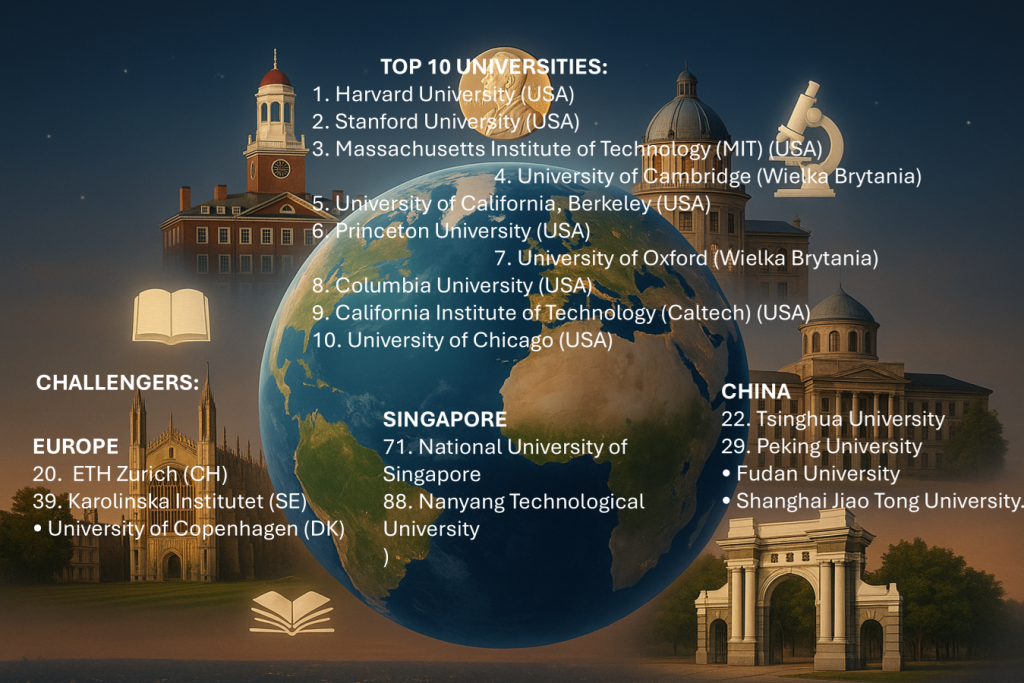
Introduction: What
is the Shanghai Ranking (ARWU)?
The Shanghai Ranking,
officially known as the Academic Ranking of World Universities (ARWU), is one
of the most prestigious global university rankings. It was established in 2003
by Shanghai Jiao Tong University and evaluates institutions primarily based on
academic and research performance. Its criteria include the number of Nobel
Prize winners among alumni and staff, the number of highly cited researchers,
and the volume of articles published in top-tier journals like Nature and Science.
The 2023 ranking once
again confirmed the dominance of American and British universities, but it also
showed the advancement of institutions from Asia and continental Europe.
TOP 10 Universities
in the World in 2023
Harvard University (USA) – 1st place (consistently
for years!)
Stanford University (USA)
Massachusetts Institute of Technology
(MIT) (USA)
University of Cambridge (United Kingdom)
University of California, Berkeley (USA)
Princeton University (USA)
University of Oxford (United Kingdom)
Columbia University (USA)
California Institute of Technology
(Caltech) (USA)
University of Chicago (USA)
Key Observation:
8 out of the top 10 universities are
American, with two
British institutions (Cambridge and Oxford) maintaining their elite
status.
Why? These universities have enormous research budgets, employ the
most distinguished scientists (including Nobel laureates), and attract the
best students from around the world.
Which Universities
Are Advancing the Fastest?
1. Chinese
Universities – The Scientific Powerhouse of the East
Tsinghua University (22nd place) and Peking
University (29th) – both in the TOP 30.
Fudan University and Shanghai Jiao Tong
University are in the TOP 100.
Why? Massive government investment in science, collaboration with
Western universities, and programs designed to attract international
researchers.
2. Singapore – A
Tiny Country with a Big Scientific Impact
National University of Singapore (NUS) – 71st place
Nanyang Technological University (NTU) – 88th place
Why? Strong funding for technology and engineering, and a high
degree of openness to international collaboration.
3. Continental
Europe – A Stable Presence
ETH Zurich (Switzerland) – 20th place (the
highest-ranked in continental Europe)
Karolinska Institutet (Sweden) – 39th place (a
leader in medicine)
University of Copenhagen (Denmark) – TOP 100
Why? High levels of research funding, strong academic traditions,
and international cooperation.
Why Are Some
Universities So Highly Ranked? Key Success Factors
Money = Better Science
Harvard has an endowment of
approximately $50 billion (larger than the GDP of some
countries!).
American and British universities receive
huge grants from the government and private companies.
Nobel Laureates and World-Class Scientists
The ARWU ranking heavily rewards
universities whose alumni or staff have won Nobel Prizes.
For example, Cambridge and MIT each have
several dozen Nobel laureates associated with them.
Prestigious Publications
Universities in the TOP 100 regularly
publish in Nature and Science, which boosts
their score.
International Collaboration
The best universities attract students
and scientists from all over the world, creating global research
networks.
What Are the
Implications?
Science is a financial race – Without significant funding, it is
difficult to compete with Harvard or MIT.
Asia is rising in power – China and Singapore are investing
heavily in science and are already catching up with the West.
Europe maintains its standard but lacks
giants – ETH Zurich
and Karolinska Institutet are excellent, but they don’t have the budgets
of American universities.
Poland is far behind – The absence of a Polish university
in the TOP 300 shows that without greater investment in science,
advancement is difficult.
Summary
The Shanghai Ranking
shows that science is a global game of prestige, money, and talent.
American and British universities still rule, but Asia and continental Europe
are gradually increasing their presence. Poland still has a lot of catching up
to do, but the example of China shows that consistent investment can yield
results.
Could Poland ever
join the world’s elite? It’s
possible, but it would require significantly greater funding for
science, attracting international talent, and better collaboration with global
research centers.
In today’s industrial landscape, managing chemical risks is a critical component of environmental and occupational safety. Companies handling hazardous substances must comply with stringent regulations while minimizing their environmental footprint. The Eco-Management and Audit Scheme (EMAS), a robust EU environmental management framework, can play a pivotal role in enhancing Chemical Risk Management (CRM) by integrating systematic monitoring, compliance assurance, and continuous improvement.
This article explores how EMAS and CRM can be
synergized to improve regulatory compliance, operational safety, and
sustainability performance.
Understanding EMAS and Chemical Risk Management (CRM)
EMAS: A Framework for Environmental Excellence
EMAS is a voluntary EU certification that helps
organizations establish an Environmental Management System (EMS),
ensuring legal compliance, transparency, and continuous environmental
improvement. Key elements include:
Environmental
Policy & Legal Compliance – Ensuring adherence to regulations
such as REACH, CLP, and Seveso III.
Risk
Assessment & Mitigation – Identifying and reducing
environmental impacts, including those from hazardous chemicals.
Regulatory
Compliance – Meeting requirements under REACH, CLP, OSHA,
and other chemical safety laws.
Emergency
Preparedness – Developing response plans for chemical spills or
accidents.
The Synergy Between EMAS and CRM
Integrating EMAS with CRM enhances both
environmental and occupational safety performance while ensuring
compliance with evolving regulations. Key benefits include:
1. Enhanced Regulatory Compliance
EMAS
requires organizations to monitor and comply with environmental
laws, including chemical safety regulations.
CRM
processes (e.g., safety data sheets, exposure limits) can be
systematically tracked within the EMAS framework.
EMAS
promotes lifecycle thinking, encouraging substitution of
hazardous chemicals with safer alternatives.
CRM
data (e.g., toxicity levels, storage conditions) feeds into EMAS risk
assessments, supporting preventive action.
3. Transparent Reporting & Stakeholder Trust
EMAS
mandates public environmental statements, which can include
chemical safety performance.
Verified
CRM data (e.g., reduced chemical emissions, safer handling practices)
strengthens corporate sustainability reporting under
frameworks like CSRD.
4. Operational Efficiency & Cost Savings
Reducing
chemical waste and optimizing usage aligns with EMAS-driven
resource efficiency.
Lower
risks of non-compliance fines and workplace incidents lead to long-term
cost reductions.
Practical Steps for Integration
Align
EMAS EMS with CRM Processes
Incorporate
chemical risk assessments into EMAS environmental reviews.
Track
chemical usage, emissions, and incidents within the EMAS monitoring
system.
Leverage
EMAS for Compliance & Best Practices
Use
EMAS audits to verify compliance with REACH, Seveso III, and
industrial emissions directives.
Adopt green
chemistry principles (e.g., safer substitutes, closed-loop
systems) as part of continuous improvement.
Strengthen
Emergency Preparedness
Integrate
chemical spill response plans into EMAS emergency procedures.
Train
employees on both environmental and chemical safety protocols.
Enhance
Reporting & ESG Alignment
Include
CRM metrics (e.g., reduced hazardous substance use) in EMAS
environmental statements and ESG reports.
Use
EMAS verification to add credibility to sustainability
disclosures.
Challenges & Opportunities
Challenges:
Data
Complexity – Harmonizing CRM data with EMAS indicators requires
structured systems.
Regulatory
Evolution – Keeping up with changing chemical laws (e.g., EU
Green Deal, PFAS restrictions).
Opportunities:
Competitive
Advantage – Demonstrating leadership in safe and
sustainable chemical management.
Innovation –
Developing low-impact chemical processes that align with
circular economy goals.
Conclusion
The integration of EMAS and Chemical Risk Management creates
a powerful approach to sustainability, compliance, and workplace safety.
By leveraging EMAS’s structured environmental management system, companies can
systematically reduce chemical risks, improve transparency, and meet
regulatory demands.
For organizations handling hazardous substances, this
integration is not just a compliance exercise—it’s a strategic
opportunity to build resilience, enhance reputation, and drive
long-term sustainability.
Is your organization ready to strengthen its chemical risk management with EMAS? Stay ahead of regulatory demands and explore best practices at the upcoming “FUTURE WITH EMAS” conference on November 6-7, 2025, in Warsaw. Reserve your spot now by contacting us through the contact form!
In today’s business landscape, sustainability is no longer
optional—it’s a necessity. Companies are increasingly expected to demonstrate
their commitment to environmental and social responsibility. Two key frameworks
that help organizations achieve this are EMAS (Eco-Management and Audit Scheme)
and ESG (Environmental, Social, and Governance). While EMAS focuses on
environmental management, ESG encompasses a broader range of sustainability
criteria. Integrating these frameworks can provide a robust foundation for
sustainable business practices and compliance with evolving regulations.
Understanding EMAS and ESG
EMAS: A Focus on Environmental Excellence
EMAS is a voluntary EU framework designed to help
organizations evaluate, report, and improve their environmental performance.
Key features include:
Environmental
Management Systems (EMS): Aligned with ISO 14001, EMAS requires
organizations to establish and maintain an EMS.
Legal
Compliance: Organizations must demonstrate adherence to
environmental regulations.
Transparency: Regular
environmental reporting and third-party verification ensure credibility.
Continuous
Improvement: EMAS encourages ongoing efforts to reduce
environmental impacts.
ESG: A Holistic Approach to Sustainability
ESG criteria evaluate a company’s performance in
three areas:
Social: Labor
practices, human rights, community engagement.
Governance: Ethical
business practices, transparency, anti-corruption measures.
ESG reporting is becoming mandatory for many companies under
regulations like the EU’s Corporate Sustainability Reporting Directive (CSRD).
The Synergy Between EMAS and ESG
Integrating EMAS with ESG reporting offers several
advantages:
1. Data Collection and Standardization
EMAS provides a structured framework for collecting
environmental data, such as energy consumption, carbon footprint, and water
usage. This data is directly applicable to the “E” (Environmental)
pillar of ESG, streamlining the reporting process.
2. Credibility and Verification
EMAS requires third-party verification, ensuring the
accuracy of environmental data. This enhances the reliability of ESG reports,
which are increasingly scrutinized by investors and regulators.
3. Risk Management
Both frameworks emphasize identifying and mitigating
risks—EMAS for environmental risks and ESG for broader sustainability risks.
Combining these approaches helps organizations build resilience.
4. Regulatory Alignment
With the CSRD expanding sustainability reporting
requirements, EMAS-certified organizations are better positioned to meet these
demands, as they already have systems in place for environmental compliance and
data tracking.
5. Operational Efficiency
EMAS promotes resource efficiency and waste reduction, which
align with ESG goals. For example, reducing energy consumption (tracked under
EMAS) directly supports ESG targets like lowering carbon emissions.
Practical Steps for Integration
Leverage
Existing Systems
Use
EMAS-certified EMS to gather environmental data for ESG reports.
Align
EMAS indicators (e.g., energy use, emissions) with ESG metrics.
Expand
Beyond Environmental
Complement
EMAS with social and governance policies to cover all ESG pillars.
Implement
frameworks like ISO 26000 (Social Responsibility) for the “S”
and “G” aspects.
Engage
Stakeholders
Involve
employees, suppliers, and customers in sustainability initiatives, as
required by both EMAS and ESG.
Third-Party
Assurance
Ensure
ESG reports are verified, similar to EMAS audits, to build trust with
stakeholders.
Challenges and Opportunities
Challenges:
Data
Complexity: Integrating data from EMAS into broader ESG reports
can be resource-intensive.
Regulatory
Uncertainty: Evolving ESG regulations (e.g., potential
deregulation under the “Omnibus” proposal) may require
adaptability.
Opportunities:
Competitive
Advantage: Companies with EMAS and strong ESG performance can
attract investors and customers.
Innovation: Sustainability-driven
processes can lead to cost savings and new business models.
Conclusion
The integration of EMAS and ESG is not just about
compliance—it’s a strategic opportunity to build a sustainable, resilient, and
transparent business. By leveraging the strengths of EMAS for environmental
management and expanding into social and governance areas, organizations can
meet regulatory demands, enhance their reputation, and contribute to a more
sustainable future.
For companies yet to adopt these frameworks, now is the time
to start. The synergy between EMAS and ESG is clear: together, they provide a
comprehensive pathway to sustainability excellence.
Is your organization ready to integrate EMAS and ESG? Contact sustainability experts today to begin your journey toward holistic sustainability reporting. This topic will be one of the important elements of the agenda for the upcoming “FUTURE WITH EMAS” conference, which is planned for November 6-7, 2025, in Warsaw. Reserve the date now and leave email through the contact form to receive further detailed information about the conference.
During a special thematic session at the EUIndTech2025 conference in Cracow (June, 2025), Mr. Robert Pochyluk from the Polish Environmental Management Forum presented and discussed the consequences of upcoming legislative changes in environmental management systems, particularly in the context of integrating the EMAS system with the revised Industrial Emissions Directive (IED). These changes mean that previously voluntary environmental management systems will become mandatory for certain groups of enterprises, especially those required to hold integrated permits. We are at the threshold of a significant transformation of environmental practices in industry.
EMS as a Mandatory Tool
The EMAS system or ISO 14001, which for many years
functioned as voluntary tools, are now being formally incorporated into legal
obligations resulting from the revised IED directive. Article 14a of this
directive imposes on operators of installations covered by the directive’s
scope the obligation to implement an environmental management system – for each
installation separately. This is a fundamental change, because until now
organizations could apply one centralized system (for ISO 14001) covering the
entire company structure. Currently, it may be necessary to adapt systems so
that they individually cover each installation.
Required System Elements:
The environmental management system – according to the
directive – must include, among others:
Environmental policy objectives oriented toward
continuous improvement of efficiency, including actions related to waste
reduction, water reuse, emission reduction, and energy consumption reduction.
Integration with energy management systems
resulting from the energy efficiency directive.
An inventory of hazardous substances used and
risk analysis of their use, along with assessment of possibilities for their
substitution.
A transformation plan toward clean industrial
technologies (here the European Commission still needs to specify details –
deadline: end of 2025).
All this data will need to be publicly available – most
likely in a form similar to the EMAS environmental statement. The European
Commission has until the end of 2025 to specify this.
Deadlines:
The first compliance audits of environmental management
systems must be conducted no later than July 1, 2027. This means that real
preparations should begin no later than 2026, if not earlier. Delays may result
not only in increased costs of certification services but also in the risk of
failing to meet legal obligations.
Practical Effects of the Introduced Regulations for
Companies:
They elevate the status of environmental
management systems, making them not only a management tool but also a formal
requirement,
They may lead to the need to reorganize ISO
14001 systems so that they cover each installation separately,
They may force certification bodies and EMAS
verifiers to expand the scope of services and assessment methodology,
They may standardize the practice of
administrative bodies, which have previously interpreted the significance of
environmental systems differently when issuing permits.
Legal Context and National Implementation
The revision of the IED directive is to be implemented into
Polish law by the end of 2026. It is expected that the changes will include
amendments to the Environmental Protection Law (probably articles 204-214),
determination of accreditation procedures for certification bodies, and
principles for recognizing ISO 14001 systems and EMAS registration. Poland will
have some degree of freedom in implementation, particularly regarding the
recognition of certificates and verifiers.
This autumn, POMInnO will coorganize a game-changing international conference where environmental management meets chemical safety and sustainability. “FUTURE WITH EMAS” will showcase how the trusted EMAS (Eco-Management and Audit Scheme) can drive meaningful integration with Chemical Risk Management (CRM) and Environmental & Social Governance (ESG).
💡 What to Expect:
Day 1: joint thematic sessions, case studies, practical tools and inspiring talks on the future of EMAS – concluded with the EMAS Gala and networking dinner.
Day 2: dedicated expert tracks for EMAS Article 49 representatives and LIFE Fit for REACH-2 project partners (closed sessions).
🎯 Who Should Attend?
environmental and sustainability managers,
EMAS and EMS practitioners,
chemical safety experts,
ESG professionals and regulatory compliance
officers.
🔍 Why Attend?
Latest updates on EU regulations (EMAS, REACH, CSRD),
Real-world integration strategies for EMAS with ESG and CRM,
Inspiring speakers from across Europe,
Practical tools for SMEs and large enterprises,
Extensive networking opportunities with European environmental leaders.
👥 Organized by: General Directorate for Environmental Protection, Polish Forum for Environmental Management, Łukasiewicz – Industrial Chemistry Institute, and POMInnO.
🤝 Supported by:
European Commission, Ministry of Climate and Environment
Cofinanced by: Life Fit for REACH 2 Project and
National Fund for Environmental Protection and Water Management.
📩 Full agenda and
registration details coming soon.
Save the date and leave your email to stay informed ➡️
Contact Form
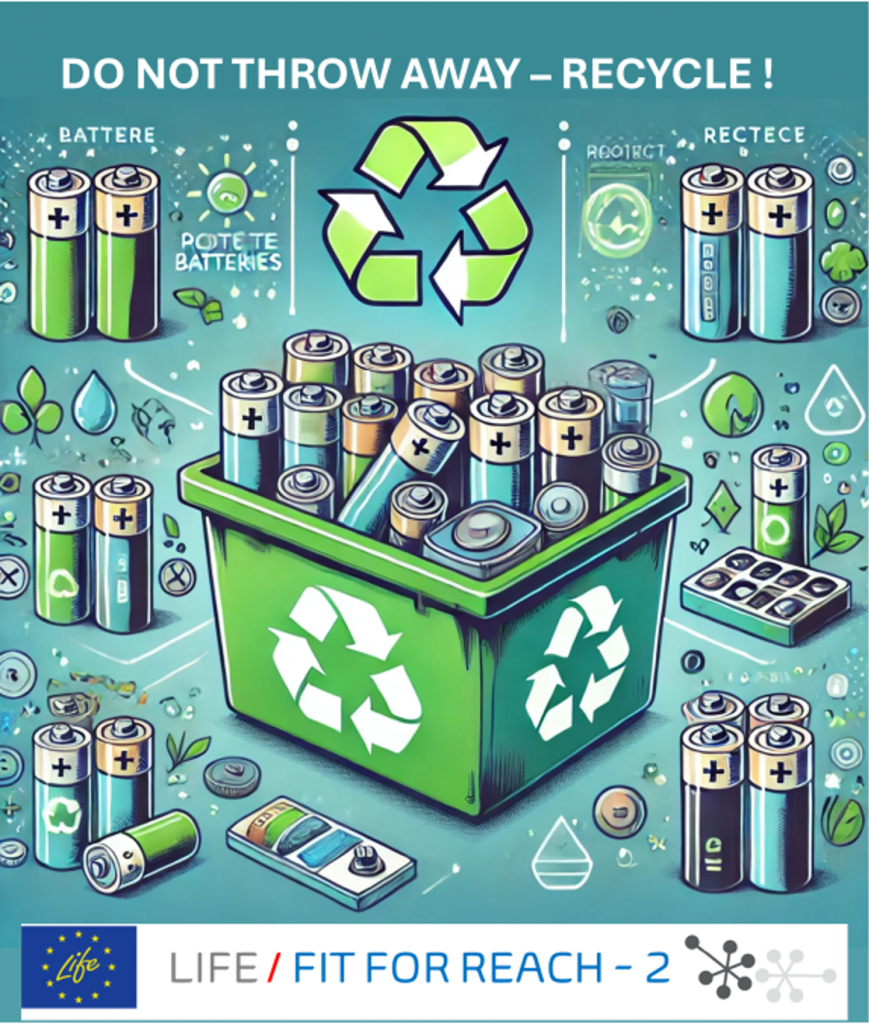
🔋 Do you know what happens to batteries after
use? 🔋
📢 We use them daily in smartphones, laptops, and
electric cars – but what comes next❓ If they end up in regular waste, they can
cause soil, water, and air pollution 🌍😱
⚠️ What’s inside batteries? ❗ Lead – neurotoxic, damages the nervous system 🧠 ❗ Mercury – accumulates in the food chain 🐟 ❗ Cadmium – carcinogenic and harmful to soil 🌱 ❗ Lithium – can lead to fires 🔥 ❗ Nickel –harmful to human health 🌱
♻️ What can you do?
✅ Dispose of used batteries at special collection points 🔄
✅ Choose devices with long-lasting batteries 📱
✅ Educate others – it makes a difference! 🎓
More details available here . 👉 Let’s protect our planet together! 🌱💚
👉 If you work for a company involved in battery collection, recycling, or disposal, or handle other hazardous materials, and want to explore how we can assist you within the LIFE Fit for REACH-2 project – fill out the questionnaire and we will contact you immediately. 🌱💚
Urban areas are
constantly transforming, with construction and development shaping the cities
of tomorrow. But amid this progress lies a hidden danger: the presence of
hazardous substances in the very materials used to build our homes and cities.
The NonHazCity 3
project is tackling this issue head-on, aiming to reduce the risk of harmful
substances infiltrating our urban spaces. Through targeted screening
activities, the project sheds light on the areas that require deeper
investigation, paving the way for a healthier, safer urban future.
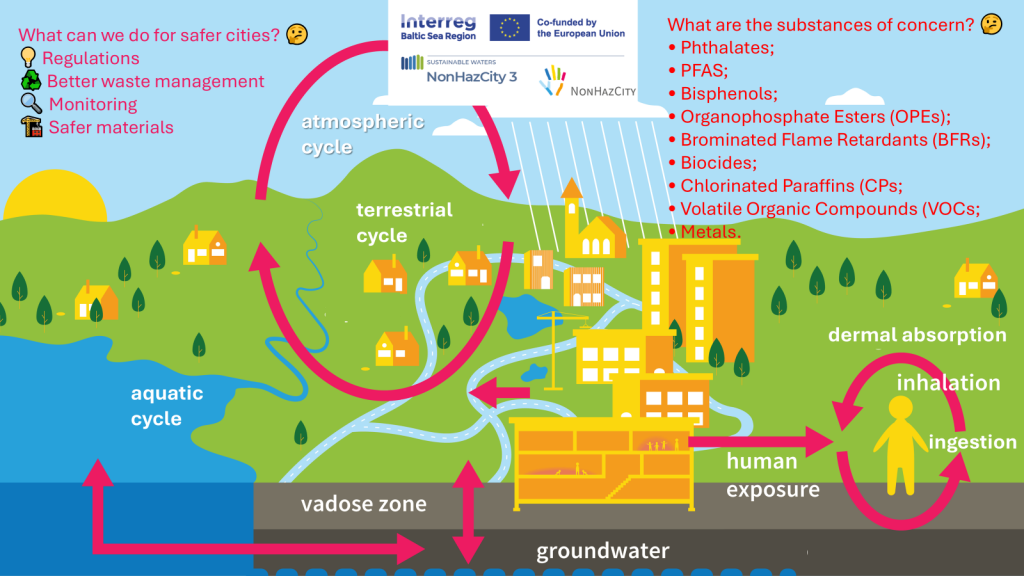
The Scope of
NonHazCity 3’s Screening Investigations
Focusing on five
cities in the Baltic Sea region—Tallinn, Helsinki, Turku, Västerås, and
Stockholm—NonHazCity 3 set out to understand how construction materials
contribute to contamination in both indoor and outdoor environments. By
examining five key matrices—construction materials, stormwater, indoor dust,
indoor air, and residential wastewater—the project uncovered significant
findings regarding hazardous substances in urban spaces.
While not every city
screened all five matrices, the results revealed several harmful substances
commonly found in construction materials, offering valuable insights for both
policymakers and the construction industry.
Common Hazardous
Substances Found in Urban Spaces
Here are some of the
most problematic substances identified:
Phthalates: Often found in PVC flooring, cables, and
roofing membranes, phthalates make plastics more flexible but disrupt
hormones in living organisms.
PFAS: Known for their extreme persistence, PFAS are widely used in
products like non-stick coatings and water-resistant fabrics but pose
long-term health risks.
Bisphenols: These endocrine disruptors are commonly
found in plastics.
Organophosphate Esters (OPEs): Used as flame retardants and
plasticizers, OPEs are linked to adverse health effects.
Brominated Flame Retardants (BFRs): These substances can cause neurological
and hormonal disruptions and linger in the environment.
Biocides: Widely used to prevent mold growth, biocides contribute to
microbial resistance.
Chlorinated Paraffins (CPs): Persistent in the environment and
potentially carcinogenic, CPs are often used in building materials.
Volatile Organic Compounds (VOCs): Found in paints and adhesives, VOCs can
cause a range of health problems.
Metals: Toxic metals such as lead, cadmium, and mercury are present in
construction materials and pose serious health risks even in small
amounts.
Key Findings: The Reality of Hazardous
Substances in Our Cities
Indoor Dust: The investigation showed that indoor
dust closely reflects the hazardous substances found in the materials used
within the building. In homes with PVC flooring and treated surfaces,
higher concentrations of organic pollutants, like plasticizers, PFAS, and
chlorinated paraffins, were detected.
Stormwater: Stormwater serves as a major conduit for
pollutants, transporting contaminants like biocides, organophosphate
esters, metals, and PFAS from buildings into natural environments. Cities
with newer constructions, particularly those with wooden claddings, showed
high levels of biocides like diuron, propiconazole, and mecoprop.
PFAS: The concentration of PFAS varied significantly between cities,
underscoring the widespread use of these harmful substances in a range of
products, despite their severe environmental and health impacts.
TCPP Contamination: This pervasive flame retardant was found
in stormwater runoff, wastewater, and indoor dust, highlighting its
widespread contamination in urban areas.
Emerging Substances: The research also found evidence of new
hazardous substances replacing older ones in construction materials,
pointing to the need for ongoing monitoring and research.
Recommendations for
a Safer, Healthier Urban Future
For
Regulators: Strengthen
regulations on hazardous substances in construction materials and promote the
use of safer alternatives.
For
Public Authorities: Enforce
compliance with current regulations and enhance monitoring for emerging
contaminants. Public awareness campaigns can help citizens understand the
risks, while improved waste management ensures recycled materials are
hazard-free.
For
Constructors: Avoid materials
treated with harmful chemicals and demand transparency from suppliers regarding
the substances used. Replace the most harmful chemicals with safer
alternatives, and ensure robust waste management practices to prevent hazardous
substances from re-entering the environment through recycling.
Conclusion:
Collaboration for Safer Cities
The NonHazCity 3
project highlights the urgent need for continuous monitoring, stricter
regulations, and the promotion of safer construction materials. By following
these recommendations, cities in the Baltic Sea region—and around the world—can
protect both the environment and public health.
Collaboration across
cities and countries is crucial. By sharing knowledge and best practices, we
can collectively tackle pollution caused by hazardous substances in
construction materials and make our urban environments safer for everyone.
If you are interested in this article, if you would like to find out more about hazardous substances in your environment – you can find interesting information on our websites and social media, but you can also make your contact in the form and we will regularly inform you about our materials (articles, reports, training courses, meetings) in which we will deepen this topic and suggest safe and proven solutions. In this form you can also declare your willingness to actively participate in our project, which will be of benefit to us (feedback) but also to you (concrete support).
Let’s work together to
build healthier, greener cities for future generations.